Roof Ventilation Explained: How Ridge Vents and Soffit Vents Protect Your Roof
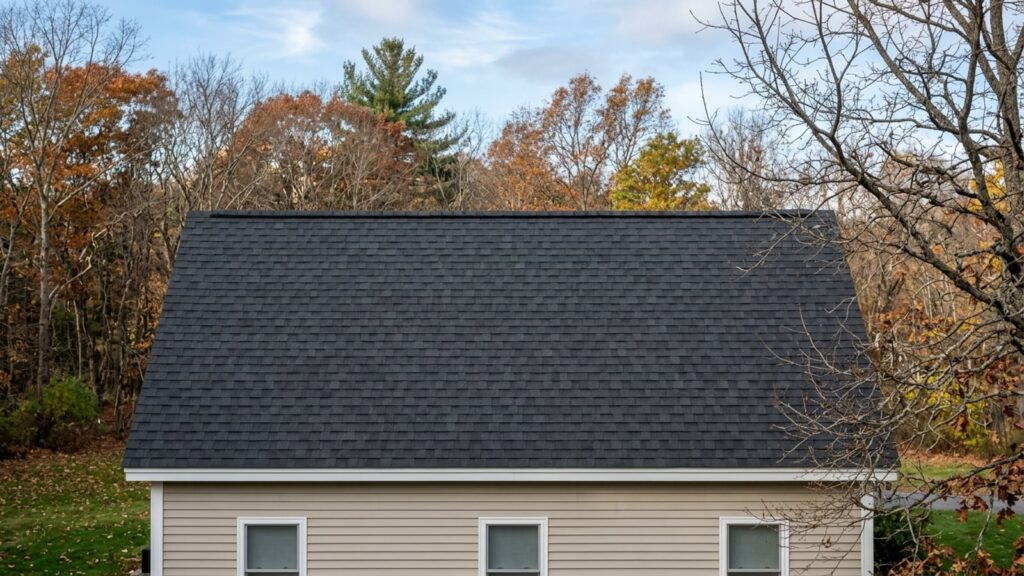
Roof ventilation is a steady flow of outdoor air that enters low at the eaves through soffit vents and leaves high at the peak through a ridge vent. That airflow carries heat and moisture out of your attic in every season, which helps protect your shingles and the wood and insulation underneath. The key is balance, meaning the air coming in and the air going out have to roughly match.
How roof ventilation works
Warm air rises, and roof ventilation puts that simple fact to work. Cool air comes in through intake vents near the bottom of the roof, passes along the underside of the roof deck, and exits through exhaust vents near the top. Wind blowing over the roof helps pull the air along.
Owens Corning puts it plainly in its guide to roof vents: every attic ventilation system should have a combination of properly placed intake and exhaust vents. If either half is missing, the system cannot move air the way it is designed to.
Soffit vents bring fresh air in
Soffit vents sit under the roof overhang, and Owens Corning calls them the most common type of intake vent. They are easy to forget because you rarely look at them. They are also easy to block.
The ENERGY STAR attic ventilation guide gives a clear warning that the most common mistake is blocking airflow at the eaves, and it states that soffit vents should never be covered with insulation. Rafter vents, also called insulation baffles, keep a channel open between the soffit and the rest of the attic. Blown-in insulation can push into the eaves, and both the ENERGY STAR guide and Owens Corning warn about it.
Ridge vents let warm, damp air out
A ridge vent runs along the peak of the roof, where the warmest air collects. Owens Corning says ridge vents are ideally placed to catch the wind blowing over the roof, which helps expel moisture and heated air. Because the vent is continuous, it works along the whole length of the ridge instead of in one spot.
Because the ridge vent is the exhaust half of the pair, it only works when the soffits feed it. A ridge vent paired with open soffit intake is the setup Owens Corning describes as a combination of intake and exhaust, and it suits a standard pitched roof.
Why balance matters more than the number of roof vents
Owens Corning calls balance the key concept in proper roof ventilation. Too much exhaust and too little intake can pull air from inside your living space up into the attic, and the reverse can push warm attic air down into the house. It says having only one type of venting, or an uneven amount of one type, can lead to pressurization problems.
Think of it as breathing in and out. A ridge vent can only exhaust about as much air as the soffits let in, so adding more ridge vent without adding intake does not help. It is the pair that does the work.
How much vent area an attic needs
Vent size is measured as net free area, the clear open area after you subtract the screening. The Pacific Northwest National Laboratory’s attic ventilation guide says the total net free ventilating area should not be less than 1/300 of the area of the attic space to be ventilated for a roof with high and low openings. For a roof without overhangs or other soffit or eave openings, it says not less than 1/150.
The same guide notes that most screened vents have a 60 percent free area, so the vent you buy has to be larger than the number you need.
The guide also says no more than 50 percent and no less than 40 percent of the required area should be high on the roof, and that a minimum of 1 inch of space should be kept between the insulation and the roof sheathing. These are guide figures. Building codes set the required ventilation for your home, and local codes can differ, so ask your roofer to confirm what applies where you live.
What good roof ventilation does for shingles and the attic
Roof ventilation earns its keep in every season, including summer. The two jobs look different on the calendar, but they come down to the same thing, which is controlling heat and moisture in a space that was never meant to hold either.
In summer, ENERGY STAR explains, natural airflow in a well-vented attic moves superheated air out, which protects roof shingles and removes moisture. Removing that heat is part of how ventilation protects the shingles.
In winter the goal flips, and keeping the attic cold reduces the potential for ice damming. Owens Corning adds that poor balance can let moisture build until it causes mold, mildew and structural damage to the roof.
Insulation, air sealing and fans work with the vents
Ventilation is only one layer. ENERGY STAR says complete insulation coverage along with sealing air leaks gets you the best performance from your insulation. Air that leaks through ceiling gaps ends up in the attic, where the vents have to deal with it.
That is why the details around the eaves matter so much. The PNNL guide says there should be a barrier between the insulation and any roof vent openings so air can move freely, and ENERGY STAR advises keeping insulation at least 3 inches away from can lights unless they are rated for insulation contact. Those small clearances protect both airflow and safety.
If you plan to add attic insulation, make sure whoever does the work keeps the soffit channels open with baffles. Blown insulation may need an extra block at the eaves, according to ENERGY STAR, so it does not end up in the soffit.
Plenty of homeowners ask whether an electric attic fan would solve things. ENERGY STAR cautions that if soffit vents are blocked and the attic is poorly sealed from the house, fans can pull conditioned air out of the living space and into the attic, raising energy use. Its guide sends you to air sealing and insulation strategies first.
Owens Corning makes a similar point, saying powered fans need enough intake or they can draw conditioned air out of the house. So before you add anything, check that the soffits are open and the vents you already have are working.
If you are replacing your roof, ask how the ventilation will be handled instead of assuming it will be. Ask what type of intake and exhaust the roof will have, and whether the soffits are open and unobstructed. Ask who will make sure that insulation does not block the eave channels.
Ask, too, whether the ventilation products are meant to work with the shingles you chose. Owens Corning says contractors should offer several products so you end up with a balanced system of intake and exhaust vents. A contractor who can answer these questions clearly has thought about the whole roof, and about more than the shingles.
Signs your attic is not breathing, and when to act
Winter frost under the roof deck, damp or compressed insulation, a musty smell, and soffit vents painted shut or buried in insulation are all hints that air is not moving. Owens Corning’s maintenance guide says to confirm that nothing, such as insulation, stored items or insect hives, blocks airflow, and that the soffit screens are clear of debris and paint. A flashlight and a dry day are enough for a first look from inside the attic.
Safety comes first up there. Step only on the framing or a board laid across it, since ceiling drywall will not hold you, and use a ladder that is tall enough, set on firm level ground. Leave anything on the roof itself to a professional.
A roof replacement is the best moment to fix ventilation, because the deck is open and the vents can be done correctly. Ventilation is a fair question to raise at a Valley Exteriors free estimate, where a certified professional looks over the existing roof. Learn more about our roofing replacement service in Appleton and the Fox Valley.