Metal Roof vs Shingles: Which Is Better for a Wisconsin Home?
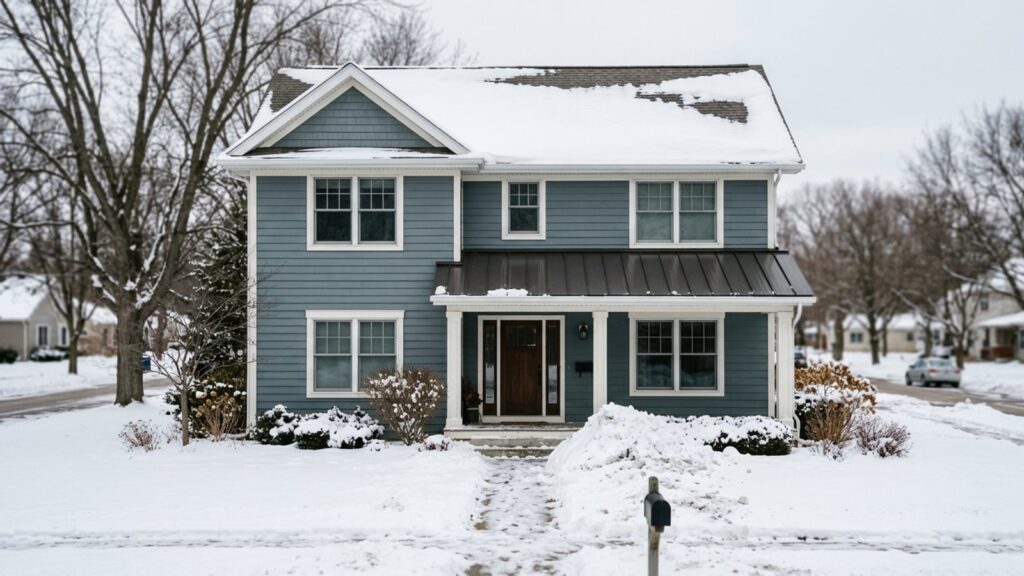
For a Wisconsin home, metal roof vs shingles mostly comes down to how long you’ll stay. Asphalt shingles are usually the better value if you might sell before a good shingle roof wears out, while metal earns its higher price when you plan to stay for decades. Metal sheds snow and can outlast shingles, but it costs a lot more upfront and won’t cure ice dams on its own.
We’re an Appleton contractor, and our roof replacement work covers both asphalt and metal, so I don’t have a dog in this fight. Here’s how the two compare on the things that matter most around the Fox Valley: cost over the life of the roof, snow and ice, noise, energy, looks and resale.
Metal roof vs shingles: what each costs over the life of the roof
Start with the sticker price. The Metal Roofing Alliance, a metal industry trade group, says to expect a metal roof to cost roughly two to three times what an asphalt shingle roof costs. That’s a big gap on day one, and it’s why I’d compare cost per year of roof rather than the number at the bottom of the estimate.
Lifespan is the other half of that math. The same trade group says to count on 30 to 50-plus years from a metal roof, partly because metal can often be repainted instead of replaced. Owens Corning, one of the brands we install and a shingle maker, says properly installed, high-quality asphalt shingles can give two to three decades of protection.
Put those numbers side by side and the race is closer than the price tag suggests. If metal costs two to three times as much, it has to last two to three times as long to break even per year. Against shingles that give you two to three decades, metal only gets there when it lasts toward the long end of its range.
Metal’s real edge is time. If you’d otherwise pay for a second shingle roof while you still live in the house, its long life starts paying you back. If you’re likely to sell first, most of that extra life goes to the next owner. If the upfront cost is the sticking point, we do offer financing, though I’d still run the cost-per-year math first and compare the rate with your own bank or credit union.
How metal and shingles handle Wisconsin snow and ice dams
The Metal Roofing Alliance says metal’s smooth surface encourages snow to shed. Less snow sitting up there through a long Wisconsin winter means less weight. Shingles grip snow, so it usually stays put until it melts.
The catch with metal is where that snow lands. A slab of wet snow sliding off can bury a front step, flatten shrubs, hit a parked car or tear at gutters. The Metal Roofing Alliance itself says homeowners sometimes need to control the release of snow to protect people, vehicles and landscaping below. That’s the job of snow guards, which hold snow in place over doors, decks, walkways and driveways so it melts off gradually.
Ice dams are where people expect metal to save them, and it only does part of the job. ENERGY STAR explains that ice dams come from an attic that’s too warm: snow melts from the heat below, then refreezes at the gutters. Keeping the attic cold is what reduces them, through ventilation plus insulation and air sealing that block heat from the rooms below.
Metal’s slick surface does help snow slide off before it can melt and refreeze, and even the Metal Roofing Alliance pairs that benefit with proper attic insulation and ventilation. So whichever roof you pick, a replacement is the right time to check what’s going on in the attic. Put a new roof on a warm attic and you’ve still got a warm attic.
Why a well-installed metal roof isn’t noisy in rain or hail
If you’ve ever stood in a pole barn during a downpour, you know the racket. That roof is usually bare metal over open framing, with nothing underneath to soak up the sound. On a house, metal should go over solid decking and underlayment, with an insulated attic between the roof and your bedroom.
So are metal roofs noisy? Built that way, not really. The Metal Roofing Alliance says there’s little difference between metal and other roofing in noise from rain or hail. You’ll still hear a hard rain or a hailstorm on either roof, and if a metal roof drums like a barn, I’d look at how it was installed before blaming the metal.
What cool roofs can and can’t do for energy bills in Wisconsin
A cool roof reflects more of the sun’s heat, so less of it soaks into your attic in summer. The EPA says that means less air conditioning, but in cold climates a cool roof may also raise energy use in winter. It calls that the heating penalty and says summer cooling savings typically offset it.
The EPA also notes that roofs under heavy, long-lasting snow see the smallest heating penalty, since the snow is reflective anyway. And cool options exist on both sides. Its list of cool products for sloped roofs includes asphalt shingles with light or cool-colored granules, along with metal shingles or tiles coated with reflective paint.
So in the Fox Valley, I wouldn’t choose metal over shingles, or the other way around, for energy savings alone. Our summers are short and our heating season is long. If your upstairs bakes in July or your heating bill stings, I’d start with attic insulation and air sealing, which the EPA also suggests alongside a cool roof.
How each roof looks on a Fox Valley home and what it does for resale
Looks are personal, and both materials offer plenty of choice. Architectural shingles give a roof depth and shadow lines in a wide range of colors. Metal offers more than the standing seam panels you see on modern farmhouses, too. The Metal Roofing Alliance lists metal shingles plus metal made to look like slate, tile and shake.
Think about the house and the street as well. A standing seam roof can look sharp on a newer farmhouse-style home and out of place on a traditional colonial. If you have a homeowners association, check its rules before you get attached to a material or color. We can build a 3D model of your home from photos so you can try different colors and materials on your own house.
One safety note: look at your roof from the ground, with binoculars if you like, and leave ladder and roof work to a pro, especially in winter.
Resale is where I’d keep expectations modest. A newer roof of either kind is a plus when you sell, and some buyers will love a metal roof with decades of life left. But I wouldn’t count on getting the whole extra cost back at closing, so choose metal because you want it for yourself rather than as an investment.
How to decide between metal and shingles for your house
Start with the question that settles most metal roof vs shingles decisions: how long will you own the house? If there’s a fair chance you’ll sell before a quality shingle roof wears out, shingles are usually the smarter money. If this is the house you plan to stay in for decades, metal deserves a serious look, because staying put is how its longer life pays you back.
Next, walk around the house and look from the ground at what sits under each eave. If sliding snow would land on a front step, a deck, a driveway or a lower roof, plan on snow guards there. Then think about the attic. If you’ve had ice dams, fix the ventilation and insulation no matter what goes on top.
Last, call your insurance agent to ask how either roof would affect your policy, and compare real prices for your roof rather than averages. My rule of thumb is that metal makes the most sense for a long-term owner with room for the snow to fall and the budget to cover the gap. For most other Fox Valley homes, a well-installed architectural shingle roof is hard to beat on value.
If you’re weighing a metal roof vs shingles for your own home, start with our roof replacement page and request a free estimate. We install both asphalt and metal, so you can ask us to price each one for your roof.